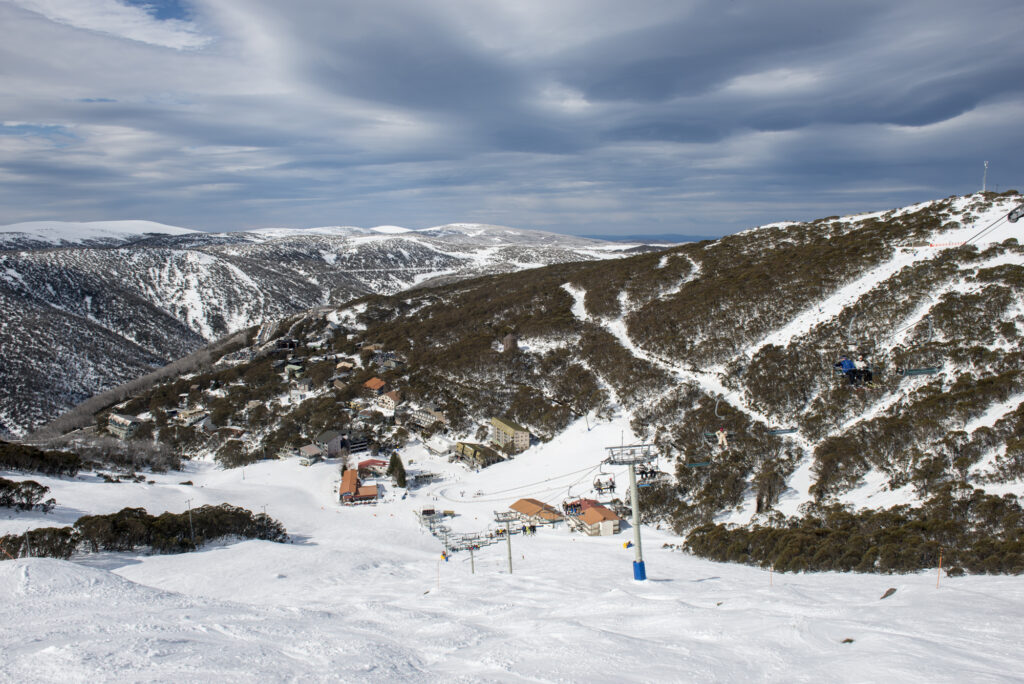
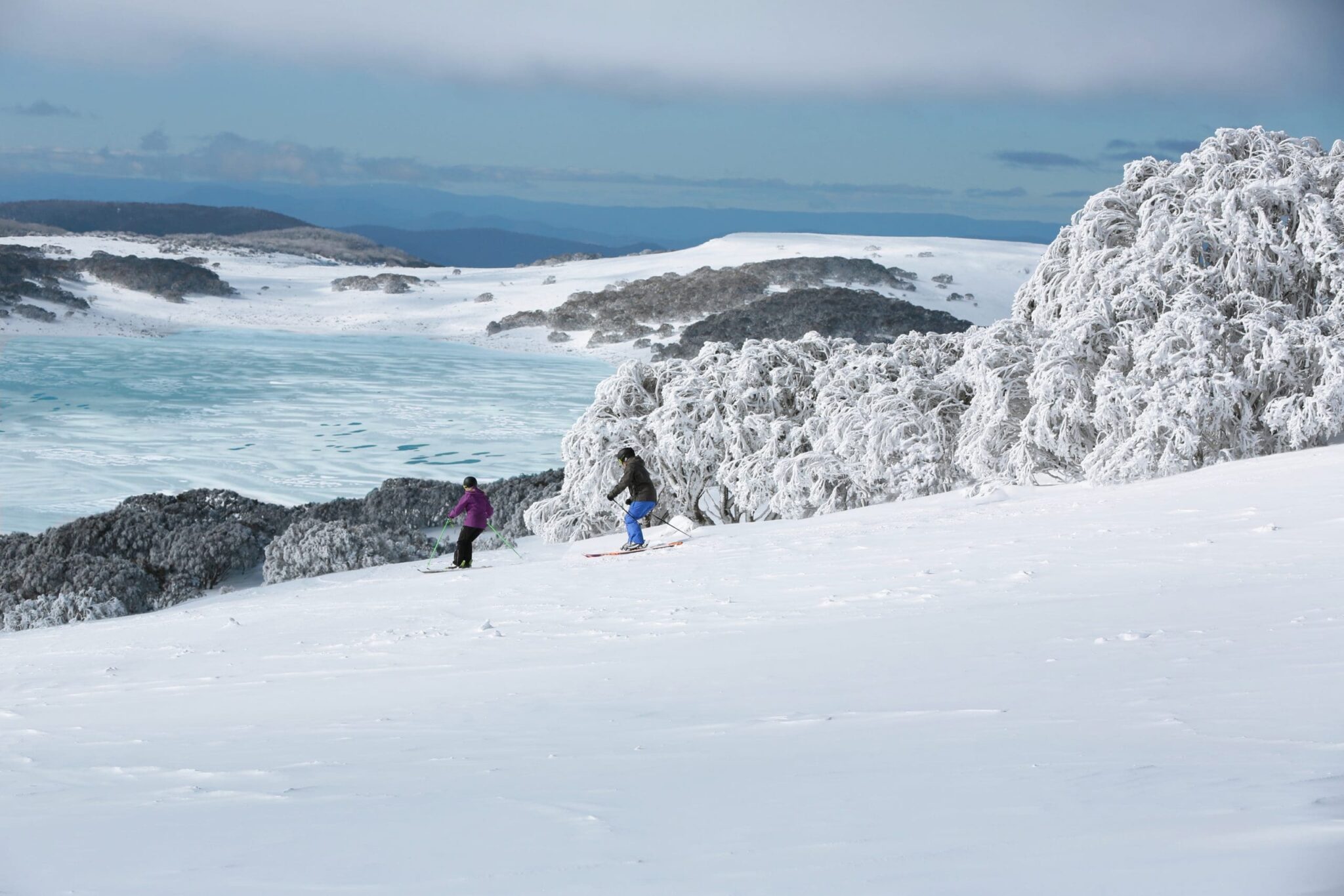
Make Albury Wodonga your home base for the 2026 snow season. Enjoy the ski slopes of Falls Creek or the snowfields of Mount Buffalo, or head further to Hotham or Thredbo.
Where to go Travel time by car*
Falls Creek
The largest ski field in Victoria, Falls Creek has over 90 runs accessed by 15 lifts. Join a lesson with an experienced instructor or try something different and go night skiing. 1hr 50min
Mount Buffalo
Snow play, tobogganing, cross-country skiing, winter walking, and more can be enjoyed at Dingo Dell and Cresta Valley. 1hr 50min
Hotham
Australia’s highest alpine village, nestled amongst the Victorian Alps of the Great Dividing Range. 2hr 20min
Thredbo
Home to Australia’s longest ski runs and the only alpine gondola, Thredbo sits atop Mount Kosciuszko, the tallest mountain in Australia’s mainland. 3hr 20min
Mt Buller
Over 300 hectares of skiable terrain and 2 Toboggan parks. It has the largest lift network in Victoria with 13 chairlifts, 2 T-bar, 2 rope tows and magic carpets. 2hr 30min
Equipment Hire
Auski 02 6021 4511 478 Olive Street, Albury
Paul’s Ski Shop 02 6056 2488 6 Thomas Mitchell Drive, Wodonga
Cross Country Skier 02 6056 6605 2 Kingswood Way, West Wodonga
Ray’s Ski Shop 03 5759 5392 21 Myrtle Street, Myrtleford
Happy Valley Hub 03 5751 1845 5023 Great Alpine Road, Ovens
Porepunkah Ski Hire 03 5756 2213 5 Nicholson Street, Porepunkah
Bright Ski Centre 03 5755 1093 22 Ireland Street, Bright
JD’s Ski Hire 03 5755 1557 Cnr Anderson & Burke Streets, Bright
SkiPlus Ski Hire 0409 062 244 24 Kiewa Valley Highway, Mt Beauty
Bogong Ski Centre 03 5754 4555 228 Kiewa Valley Highway, Tawonga South
Kiewa Valley Snowsports 03 5754 4000 239 Kiewa Valley Highway, Mt Beauty
Yogi’s Ski & Snowboard Hire 03 5758 3377 8 Falls Creek Road, Falls Creek
Bus services
Falls Creek Coach Service 03 5754 4024 fallscreekcoachservice.com.au
Albury to Falls Creek
Connecting with flights
FallsBus 1300 781 221 fallsbus.com.au
Albury Airport to Falls Creek
Connecting with flights
HothamBus 1300 781 221 hothambus.com.au
Albury Airport to Mt Hotham
Connecting with flights
Snow Resort Car Entry and Lift Passes
Car Entry Lift Passes
Falls Creek
Car: Day visit $67.00
Lift: Adult – from $177.00
Overnight from $134.00 Child – (5-18) from $97.00
Mt Buffalo Free No Lifts
Mt Hotham Day visit $67 Adult – from $177.00
Overnight from $134 Child – (5-17) from $97.00
Thredbo Day visit $29.00/per day Adult – from $154.00
Child – (5-18) from $85.00
Mt Buller Day Visit $67.00 Adult – from $126.00
Overnight From $134.00 Child – (5-18) from $76.00
Things to know before your go
- Snow chains (diamond pattern) are mandatory to be carried in all vehicles, including 4×4 vehicles during the declared snow season and must be fitted when directed by the authorities.
- Pack warm specialised snow clothing, gloves, jacket and snow boots and plenty of layers.
- Consider the cost of park entry fees, lift tickets, food, accommodation, snow gear, lessons and car chains.
- Choose a ski resort suitable for your activity, e.g. skiing, snowboarding tobogganing, cross country skiing etc.
- Pre-purchase car entry, park and lift passes if required. Accommodation and transfers etc.
- Check your car – make sure maintenance is up to date, check tyres etc.
Older cars may need anti-freeze or special coolant in the radiator for low temperatures.
If driving a diesel vehicle, fill your tank with Alpine Diesel or additive, to prevent fuel from freezing.
Why you need to fit wheel chains
You must carry snow chains if you’re entering a Victorian alpine resort in winter, not only for your safety, but you can face substantial fines if you do not comply. This applies to both two-wheel and four-wheel drive vehicles and you will not be permitted to pass through the resort entry at the base of the mountain if you do not have them. In New South Wales, four-wheel drives are not required to carry chains in alpine areas in winter, but it is still recommended. In Victoria, an authorised officer can direct you at any time to fit the snow chains on your vehicle. The chains must be properly fitted to the drive wheels – which are the wheels connected to the engine or engine motors. This means front wheels for a front-wheel drive, back wheels for a back-wheel drive, and either front or back wheels for 4WD and AWD vehicles, depending on the vehicle’s power distribution. Be aware that rear-wheel vehicles do not perform as well in snow because they are more likely to lose traction.
There are snow chain hire shops in many regional towns close to alpine areas, which also offer a fitting service to check the snow chains sit correctly on your tyres. Incorrectly fitted chains can damage the wheel arches.
Here is a checklist below.
1. Practise fitting chains before a trip.
2. Fit the chains to driving wheels (check the manufacturer’s guidelines).
3. Fit chains at fitting bays on level ground.
4. If chains fall off or loosen when a vehicle is in motion, stop and check for damage before re-fitting.
5. Carry a torch, plastic garbage bag and gloves to make fitting easier.
6. Use diamond pattern snow chains. These chains “bite” through the ice and snow to maximise grip and increase directional stability.
7. Tyres must be in good condition with minimal wear.
8. For better control of your vehicle and to prevent damaging the chains, drive at a lower speed and avoid sudden acceleration or braking.
9. If you’re visiting a resort, visit their website for more information on snow chains.
Safety tips for driving up a mountain in snow
Driving in snow or icy conditions requires concentration, patience and skill. Check the weather and avoid driving through snow or ice if you can. If you decide to drive and it becomes hard to see the edges of the road, pull over somewhere safe until conditions improve. Make sure you have a mobile phone and charger with you.
Don’t forget, if you have a diesel vehicle, fill-up with at a service station near the mountain with alpine diesel mix before you ascend.
Here is a guide to other ways to stay safe when driving in fog or snowy conditions in an alpine area:
- Snowy conditions can reduce visibility. Decrease your speed and increase the distance between yourself and any drivers in front of you. Braking takes longer in icy conditions.
- Use fog lights rather than high beam. If your car doesn’t have fog lights, use the hazard lights with the headlights on low beam.
- Operate your vehicle slowly and smoothly with gentle acceleration and braking. Drive in a low gear at a low speed. If you travel too fast, the wheels could lose traction and you could lose control of the vehicle.
- To avoid wheel spin, use gradual and slow pressure on the accelerator.
- Avoid braking as you come into or go around corners. Slow down before the corner while your vehicle’s wheels are straight.
- If your vehicle does skid or you hit black ice, avoid accelerating, braking hard or turning the steering wheel quickly. This is to prevent the wheels locking up and causing loss of steering and control.
You may find yourself in a long queue when you get near an alpine resot. Stay calm and follow road signs and any directions given by resort staff. If you’re delayed in snowy conditions, use the air conditioner to circulate air through the car and help you stay alert.
Safety tips for parking at an alpine resort
Having reached your destination, follow the road signs or directions of resort staff and leave your car in a marked parking area. Protect your car against the freezing conditions with these preventative measures:
If you’re a day-tripper, park in a sunny area (if possible) to prevent ice build-up.
- Don’t apply the handbrake or park brake. Moisture can freeze the cables and brake linings. Leave the car in gear and turn the front wheels away from a slope.
- Invest in a set of rubber wheel chocks to stop the vehicle moving. Wooden chocks can slip on icy surfaces and rocks may cause damage.
- Move the wipers away from the windscreen or cover them in plastic to prevent them sticking to the windscreen.
Safety tips for driving down a mountain in snow
When you return to your car, clear any snow or ice from the roof, windscreen, windows and side mirrors. Visibility is crucial for your return journey, with mist, fog, rain and snow among the challenges of alpine driving.
- The best way to remove ice from your windscreen is with an ice scraper. Do not use a metal blade, as this will scratch the glass.
- Check that all cameras and sensors are clean and free from ice and dirt to ensure driver assistance systems operate correctly.
- To demist the front windscreen, use the car’s heater and fan at the same time as the air-conditioner.
- If you have an electric vehicle (EV), pre-warm the car while it is still charging so that you don’t deplete the battery by starting the heating when you start driving. This will help maximise your range.
- Engage low gear when you drive down a mountain. Smooth application of the accelerator and the brakes is the key to driving down safely. If you do need to brake, do it in a straight line before the corner.
- If the driver in front is slow, stay calm, and keep your distance. You may need to brake, so give yourself plenty of time to stop.
- Give right of way to cars coming up. It’s not a road rule, but it’s harder for an ascending vehicle to take off after it has stopped, so be considerate.
Final safety tips for driving in snow and icy conditions
Stay away from snow clearing machines. Firstly, they may not see you when they reverse. Secondly, the snow that is being blown could affect your visibility and contain stones that could damage your vehicle. Remove the wheel chains when the road is free from snow or as directed by resort staff. The chains are designed for low speed and can damage your tyres is used at speeds above 30-40km/h.
Knowing how to drive safely in snow and icy conditions will ensure you reach your destination and make the most of Victoria’s beautiful alpine areas.